
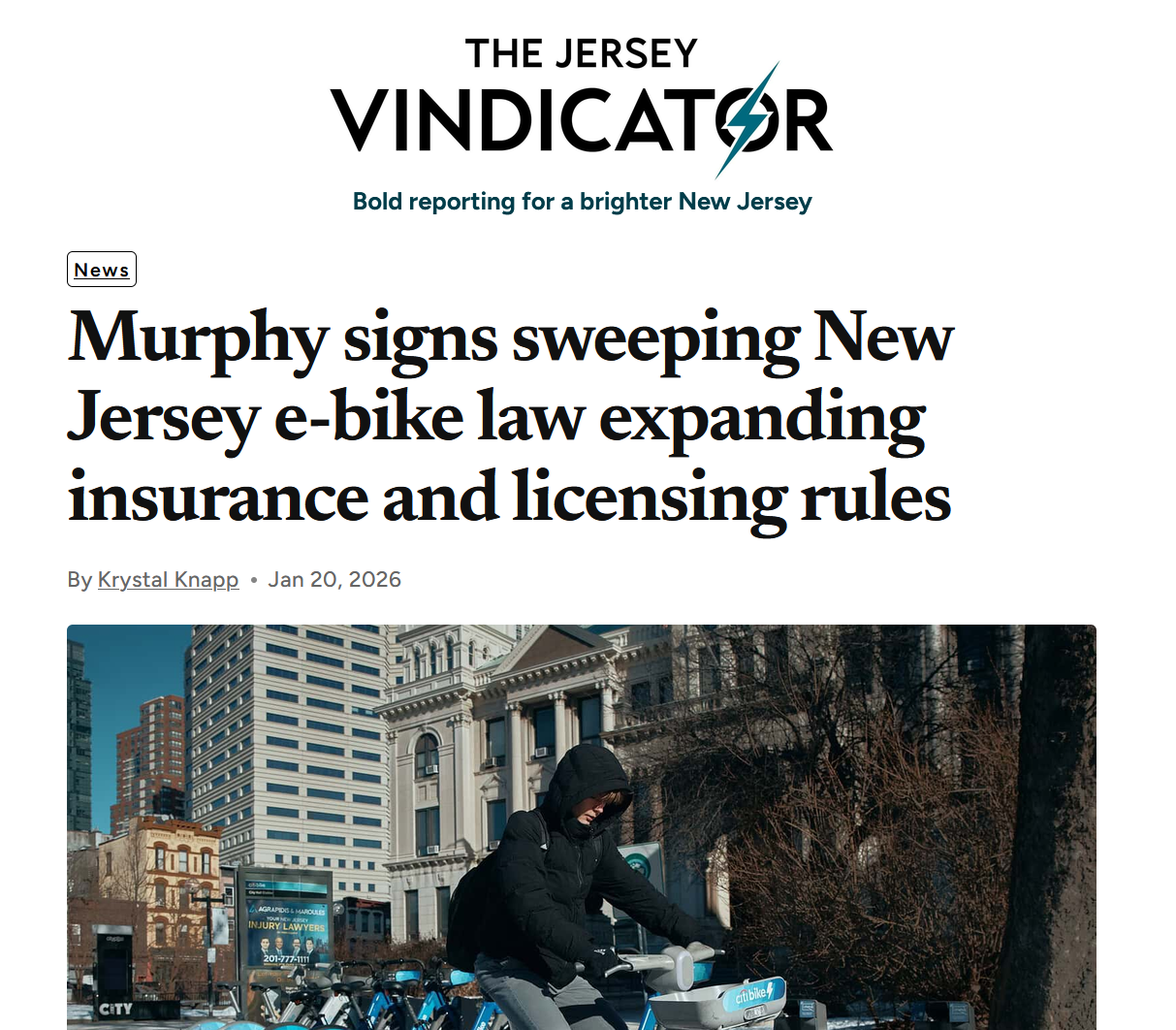
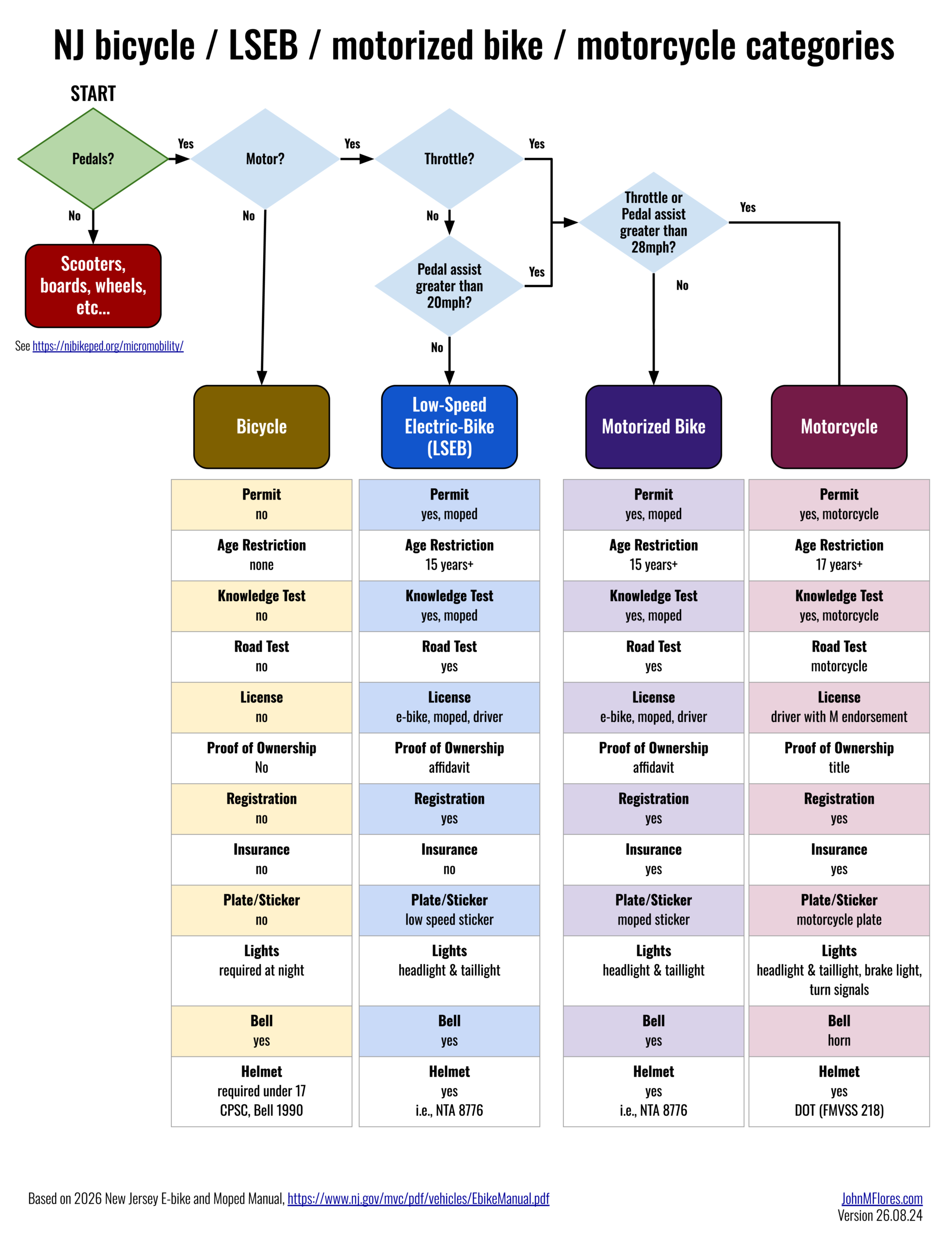
I can’t embark on this ebike journey without commenting on the new ebike law (S4834/A6235) in my home state of New Jersey. Many ebike riders are upset about them. And confused as well, foregoing the common Class 1, Class 2, and Class 3 ebike designations used throughout the industry and replacing them with the uncommon “low speed electric bicycle” and “motorized bicycle”, the latter of which are registered with the Motor Vehicle Commission (MVC) as “moped”. In their “New Jersey 2026 E-Bike & Moped Manual,” one of the table columns is labeled, “Motorcycle w/Restriction Electric Motorized Bike & Trike”. Huh? I’ve spent hours trying to simplify things with this chart and I’m not sure that I have it right…
This confusion and anger is having a chilling effect. Ebike sales in the Garden State are down anywhere from 20-90% as a result of the new law, according to news reports, in sharp contrast to overall ebike sales growth expected to be close to 10% in the United States.
I think that much of the anger comes from ebike owners who have been quietly owning and riding ebikes for several years now, not causing trouble, just like most folks in the world minding their own business and not making waves. Then along comes this media storm about ebikes being dangerous machines that must be regulated. Then elected leaders in Trenton see an opportunity to score points and do it without really delving into the issue. And then term-limited Governor Murphy signs the bill on his way out the door. What a mess.
There certainly has been an increase in ebike related incidents and accidents; one need look no further than emergency rooms around the country to see. But just like with motorcycles; 95% of motorcyclists are responsible riders but it’s the 5% that draw all the media attention and public ire. It’s the 5% that have led to this ham-fisted law in New Jersey.
This is what the NJ Bike Walk Coalition, one of the leading advocacy groups in the state, says,
“The law right now imposes burdens on families that ride their kids to school, seniors, people with disabilities, people who deliver our food, and all who use low-speed e-bikes to move around in their communities.”
Exactly. This is the 95%. They go on to say,
“Here are the basic changes we’d like to see in a Better E-bike law:
- Low-speed electric bicycles that rely on pedal assist and max out at 20 mph should not be subject to license, registration, or insurance requirements.
- Devices that exceed 20 mph should continue to have safety-focused regulations such as licensing, registration, and helmet use as well as regulations for selling and advertising.”
SOURCE: https://njbwc.org/ebike-resource/
100%.
The Regional Plan Association adds,
“While the bill is framed as a response to legitimate safety concerns, these requirements do nothing to protect people or prevent crashes. Safety on our streets is a real and urgent issue, but requiring paperwork and registration does not prevent crashes. Instead, it creates a penalty-based system that only kicks in after something goes wrong. Real safety comes from better infrastructure and the regulation of high-speed devices that already fall under these rules.”
SOURCE: https://rpa.org/news/lab/saying-no-to-new-jerseys-e-bike-law
Another 100%. That’s now at least 200%. Ebikes are a net positive for the general public:
- Ebikes get people outside to enjoy nature.
- Ebikes help people get to work and run local errands without having to use their car.
- Ebikes are a critical piece of the local delivery economy in urban areas.
- Ebikes have been known to help people find their fitness and live healthier lives.
- Ebikes have helped older bicyclists continue to ride.
- Ebikes put smiles on peoples’ faces.
With all of the traffic and congestion in the most densely-populated state in the country, New Jersey should be encouraging more people to take local trips on ebikes instead of cars. It should build bicycling infrastructure – bike lanes and bike parking. It should be offering ebike ride safety courses and education. It should make ebiking (and biking) part of its transportation planning. And parents should be held responsible for the ebikes they give their children and what they do with it.
There is a way that we as a state can implement ebikes safely. Imagine every NJ Transit train and bus station with 100 ebikes parked there every day by commuters. That’s thousands of cars off the road. Imagine every downtown and shopping center with dozens of ebikes parked – that’s more cars off the road and fewer parking lots. More ebikes benefit car drivers too, with less traffic and less competition for parking. That world is possible; it already exists elsewhere.
Ultimately, New Jersey would benefit from more ebikes on the road, not fewer. The current law is moving the state in the wrong direction.
Leave a Reply